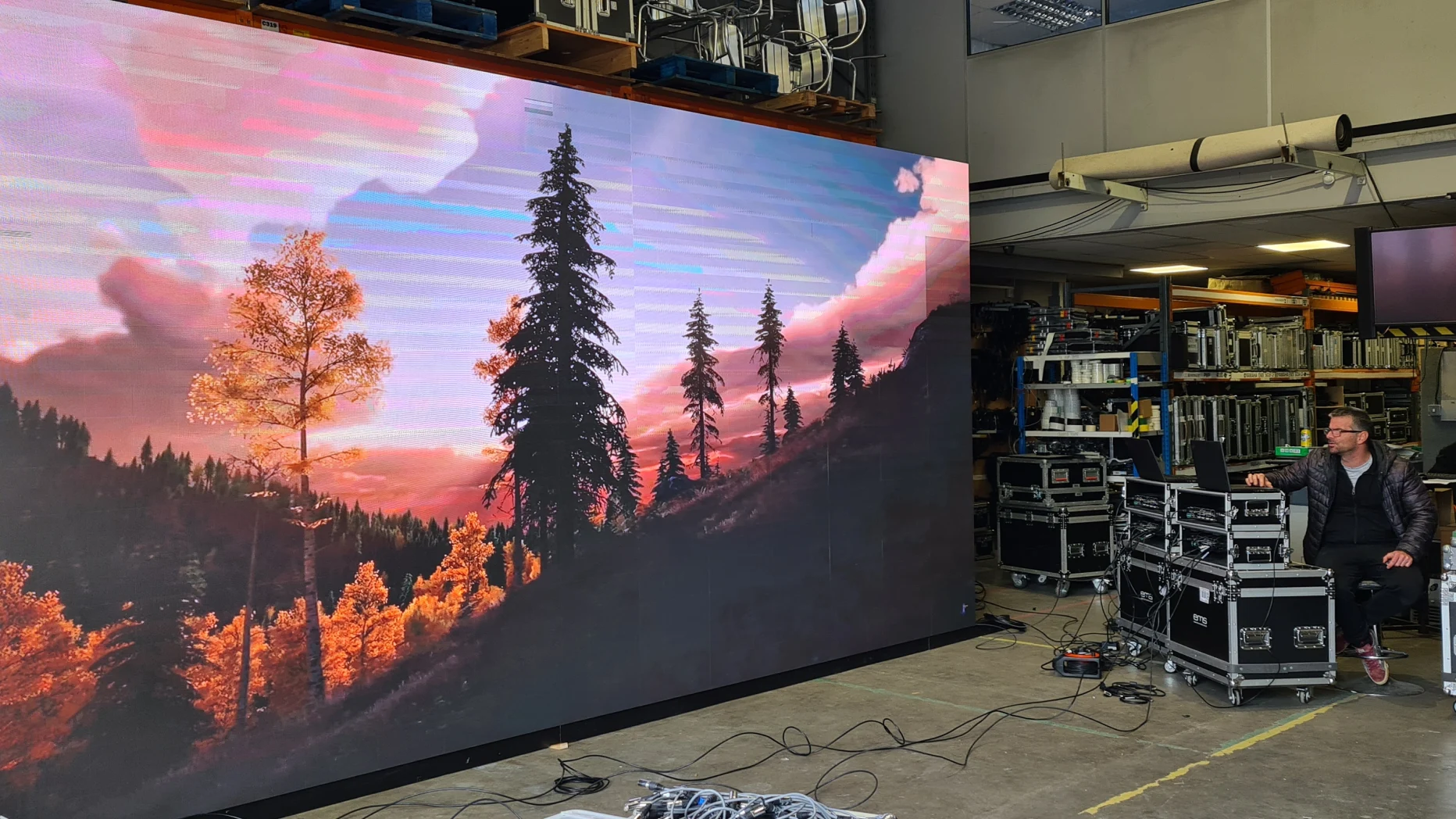
LED video walls have become one of the most powerful visual technologies in the events industry. From corporate conferences and exhibitions to music festivals and product launches, these displays create immersive visual experiences that traditional projectors cannot match.
However, hiring an LED wall involves much more than simply choosing a large screen. Event organisers must consider a range of technical specifications that influence image quality, reliability, audience experience, and installation safety.
Indoor LED walls typically operate between 800 and 1500 nits of brightness, while outdoor displays often exceed 5,000 nits to remain visible under sunlight.
Similarly, professional LED displays used in events and broadcast environments commonly operate at refresh rates of 3840 Hz or higher to avoid camera flicker.
Understanding these technical parameters ensures that the LED wall you hire delivers maximum impact and avoids costly mistakes during your event.
This guide explores every major technical factor you should evaluate before hiring an LED video wall, with industry insights and real-world examples.
Pixel Pitch: The Most Important LED Specification
Pixel pitch refers to the distance between the centres of two adjacent LED pixels, measured in millimetres. The smaller this distance, the more pixels fit within a given area, resulting in sharper and higher-resolution images.
Why Does Pixel Pitch Matter?
Image sharpness and clarity
Pixel pitch directly affects how detailed the image appears. Smaller pixel pitches (such as P1.5 or P2) pack more LEDs into the display surface, which creates smoother images and clearer text. This is essential for presentations, detailed graphics, or product launches where small text must remain readable.
Audience viewing distance
Pixel pitch must match how far the audience sits from the screen. A common rule used by AV professionals is that the optimal viewing distance is roughly 2–3 times the pixel pitch in metres.
For example:
- P2 screen → optimal viewing distance around 4–6 metres
- P4 screen → optimal viewing distance around 8–12 metres
Event type and venue size
Different events require different pixel pitches. Corporate conferences or exhibition booths usually need a tighter pixel pitch because attendees stand close to the screen. In contrast, outdoor concerts use larger pixel pitch displays since viewers are much farther away.
Typical Pixel Pitch Applications
| Pixel Pitch | Best Use |
| P1.5 – P2 | Conferences, studios, exhibitions |
| P2.6 – P3.9 | Stage backdrops and corporate events |
| P4 – P6 | Outdoor festivals and concerts |
| P8 – P10 | Stadiums and large outdoor displays |
Selecting the correct pixel pitch ensures the audience sees smooth visuals rather than visible LED dots.
Brightness (Nits): Ensuring Visibility in Different Lighting Conditions
Brightness determines how well an LED screen performs under different lighting environments. It is measured in nits (candelas per square metre).
LED displays are much brighter than projectors, which is why they are preferred for events with strong stage lighting or daylight exposure.
Key Brightness Considerations
- Indoor event environments
Indoor LED displays usually operate between 600 and 1500 nits, which is sufficient for conference halls, exhibition centres, and hotel ballrooms.
Too much brightness indoors can cause eye strain or glare, especially if the audience sits close to the screen.
- Bright indoor venues and exhibitions
Some venues have skylights or strong ambient lighting. Exhibition halls and retail environments often require 1500–2500 nits to maintain visibility against bright surroundings.
- Outdoor event displays
Outdoor LED walls must compete with sunlight. These displays often require 4000–8000 nits of brightness to remain visible during daytime events.
Choosing the correct brightness ensures that:
- visuals remain vibrant
- text remains readable
- colours do not appear washed out
Refresh Rate: Preventing Flicker on Cameras
Refresh rate refers to how frequently the LED display updates the image every second. It is measured in Hertz (Hz).
This specification becomes particularly important when an event is being filmed, livestreamed, or broadcast.
Why Refresh Rate Matters
- Camera compatibility
Low refresh rates can cause visible flickering when cameras record the LED screen. This happens because the camera shutter and screen refresh cycle become misaligned.
Professional LED walls, therefore, use refresh rates of 3840 Hz or higher to eliminate flicker during filming.
- Smooth motion graphics
High refresh rates produce smoother motion in video content, animations, and live sports visuals. This is essential for concerts, product launches, and immersive stage visuals.
- Broadcast and livestreaming requirements
Events that are streamed online or broadcast on television require very high refresh rates. Many premium LED displays now support up to 7680 Hz, ensuring flawless visuals on camera.
Without adequate refresh rates, recorded footage may show:
- rolling lines
- flickering images
- inconsistent brightness
Resolution and Screen Size
Unlike televisions, LED video walls are assembled from multiple modular panels.
This modular design allows screens to be built in almost any shape or size.
Key Factors Affecting Resolution
- Pixel pitch and screen dimensions
Resolution is determined by both the pixel pitch and the total size of the LED wall. A larger screen with a smaller pixel pitch delivers significantly higher resolution.
For example, a 6-metre wide LED wall with P2.6 pitch can deliver extremely detailed visuals suitable for presentations and high-definition video.
- Modular LED cabinets
Most rental LED panels come in standard cabinet sizes such as:
- 500 × 500 mm
- 500 × 1000 mm
These panels connect seamlessly to form large displays.
- Flexible screen shapes
Modern LED systems allow event designers to create:
- curved LED walls
- 360-degree displays
- immersive stage environments
- ultra-wide presentation screens
This flexibility makes LED technology ideal for creative stage design.
Colour Accuracy And Calibration
Colour performance is crucial for brand visuals and video playback.
Professional LED displays are carefully calibrated to ensure consistent colour reproduction across every panel.
Key Colour Performance Factors
- Wide colour gamut
High-quality LED walls support colour gamuts exceeding 90% NTSC, which ensures vibrant and realistic colours.
This is particularly important for product launches where brand colours must appear accurate.
- Panel-to-panel colour uniformity
LED walls consist of hundreds of individual panels. Without proper calibration, some panels may appear slightly different in colour or brightness.
Professional LED providers calibrate displays to maintain consistent colour across the entire wall.
- Grayscale and colour depth
Advanced LED processors support 14-16 bit colour processing, allowing smoother gradients and preventing colour banding in videos.
Contrast Ratio and Image Depth
Contrast ratio describes the difference between the brightest white and darkest black that a display can produce.
High contrast ratios significantly enhance visual quality.
Why Contrast Matters?
- Improved readability
Higher contrast makes text easier to read, even in bright environments.
- More vibrant visuals
A strong contrast ratio makes colours appear richer and more dynamic.
- Better shadow detail in videos
In cinematic visuals or dramatic stage backgrounds, contrast determines how well subtle details appear in darker scenes.
LED displays generally outperform projection systems in contrast performance, which is why they deliver more immersive visuals.
Viewing Angles and Audience Coverage
Large event venues rarely have perfectly centred seating arrangements.
A high-quality LED wall offers viewing angles up to 140–160 degrees, ensuring that visuals remain consistent even when viewed from the sides.
Why Viewing Angle Matters?
- Audience experience
If viewing angles are too narrow, attendees sitting on the sides may see faded colours or distorted visuals.
- Large conference halls
Wide viewing angles ensure every attendee has a clear view regardless of their seat location.
- Exhibition stands
Trade show visitors often approach screens from different directions, making wide viewing angles essential.
Panel Construction and Build Quality
LED walls are built from modular cabinets designed for durability and easy installation.
Key Construction Features
- Die-cast aluminium cabinets
These provide structural rigidity and help dissipate heat efficiently.
- Front-service maintenance
Some LED panels allow technicians to replace modules from the front without dismantling the wall.
- Precision panel alignment
High-quality cabinets ensure seamless panel connections so the display appears as one continuous screen.
Power Consumption and Electrical Requirements
LED walls require significant electrical power, particularly for large stage displays.
Electrical Planning Considerations
- Power consumption per square metre
LED displays can consume several hundred watts per square metre, depending on brightness levels.
- Dedicated power circuits
Large event LED walls often require dedicated electrical distribution to prevent overload.
- Backup power systems
Major events typically include generators or redundant power supplies to ensure uninterrupted operation.
Proper power planning prevents screen failure during live events.
Weather Protection (IP Ratings)
Outdoor events require LED screens that can withstand environmental conditions.
Understanding IP Ratings
- IP30 – Indoor displays
Suitable for controlled environments like conference halls.
- IP54 – Partial weather protection
Provides resistance against dust and light splashes.
- IP65 – Outdoor LED walls
Fully weatherproof against rain and dust, making them suitable for festivals and outdoor stages.
Outdoor LED systems are also designed with UV protection and sealed components to prevent damage.
Heat Management and Cooling
LED displays generate heat during operation, particularly at high brightness levels.
Why Cooling Matters?
- Maintaining consistent brightness
Excessive heat can reduce LED efficiency and affect brightness output.
- Extending lifespan
Proper cooling prevents component degradation and increases the lifespan of the display.
- Stable performance during long events
Concerts and exhibitions often run for many hours, making thermal management essential.
High-quality LED cabinets use aluminium frames and airflow design to dissipate heat effectively.
Video Processing and Signal Compatibility
An LED wall requires a video processor that converts incoming signals into the format needed by the display.
Processor Capabilities
- Multiple input formats
Professional processors support HDMI, DisplayPort, SDI, and network streaming.
- Multi-screen layouts
Event organisers can display multiple video sources simultaneously, such as live camera feeds and presentation slides.
- Real-time content switching
Technicians can instantly switch visuals during live events.
Advanced processing ensures the LED wall integrates smoothly with other AV equipment.
LED Video Wall Hire for Your Next Event
If you’re planning a conference, exhibition, product launch, concert, or corporate event, the right LED display can transform your stage and captivate your audience.
Our LED Video Wall-Hire services include:
- High-resolution indoor and outdoor LED walls
We provide LED screens with various pixel pitches to suit different venues and viewing distances.
- Custom screen sizes and configurations
Whether you need a stage backdrop, exhibition display, or immersive LED installation, we can design the perfect setup.
- Professional installation and on-site technicians
Our experienced AV engineers handle setup, calibration, and live event monitoring to ensure flawless performance.
- Advanced video processing and content integration
We support livestreaming, multi-screen content, and complex event visuals.
- Reliable equipment for conferences, exhibitions, and live productions
Our LED technology delivers vibrant visuals, high brightness, and smooth motion for unforgettable events.
Contact LED Video Wall-Hire for your requirements and create an unforgettable visual experience for your next event.
