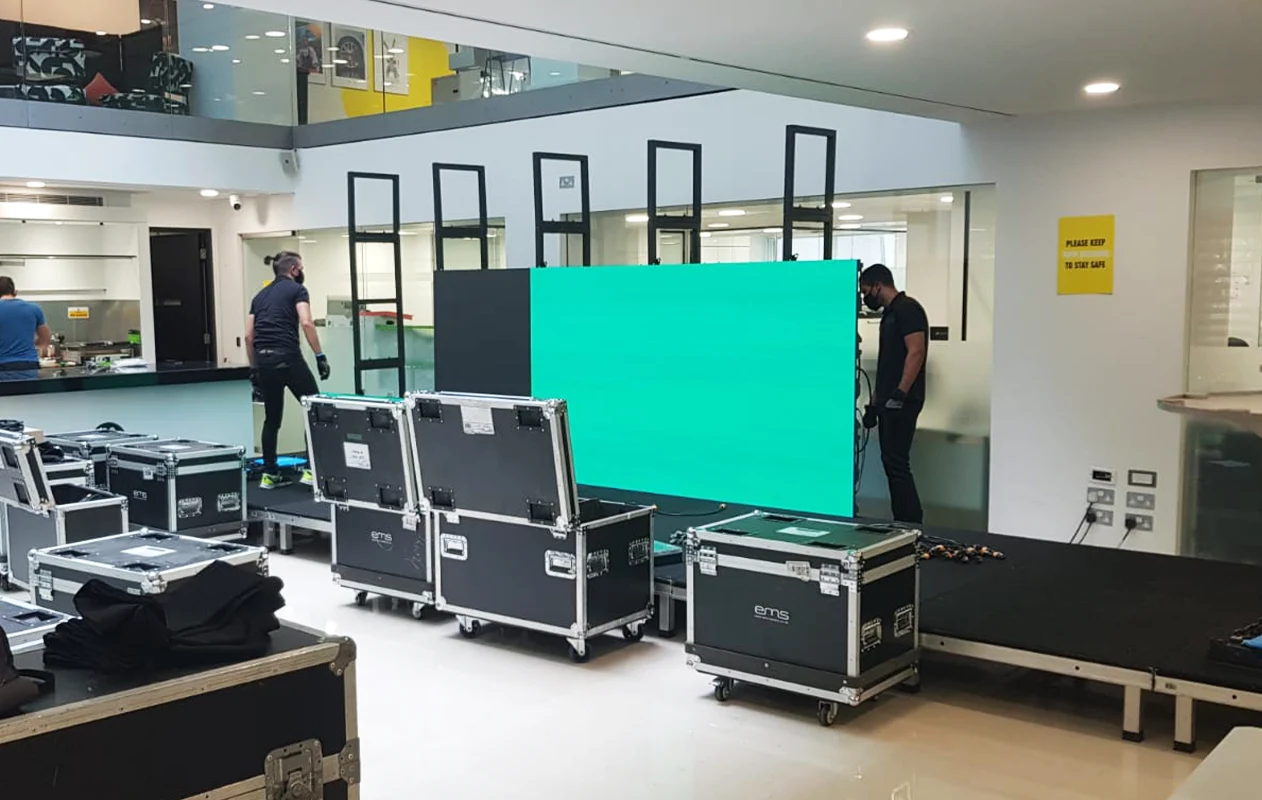
LED video walls have become a defining feature of modern visual communication. You see them everywhere now, retail stores, corporate lobbies, control rooms, exhibitions, and large-scale events. They don’t just display content. They shape how people experience a brand, a message, or a space.
But here’s the part most businesses underestimate.
They invest heavily in premium LED panels, advanced controllers, and high-resolution content. Yet they treat installation as a secondary step. That’s a mistake. Because no matter how good the technology is, it can only perform as well as the people installing it.
A poorly installed LED video wall doesn’t just look slightly off. It creates visible flaws, technical issues, and long-term reliability problems. On the other hand, when skilled technicians handle the job, the same hardware delivers a seamless, high-impact experience that lasts for years.
So the real question is not just what you buy, but who installs it.
LED Video Walls Are More Complex Than They Appear
At a surface level, LED panels look modular and straightforward. You might assume they simply connect together to form a larger screen. In reality, the system behind a video wall is far more intricate.
Each installation involves a combination of display engineering, electrical planning, and system integration. Panels must align with precision. Data signals must move across the system without delay. Power must be distributed evenly to avoid overload. At the same time, environmental conditions, such as temperature, dust, and humidity, must be accounted for.
Here’s what’s actually happening behind the scenes:
- Pixel pitch consistency determines image clarity at different viewing distances
- Signal processors map content accurately across multiple panels
- Power systems balance electrical load to maintain stability
- Mounting structures support weight while maintaining alignment
- Cooling and airflow systems prevent heat-related damage
Now, here’s where it gets critical. These elements are interconnected. A mistake in one area doesn’t stay isolated. Poor power distribution can affect brightness. Misalignment can distort content. Weak structural support can shift panels over time.
Skilled technicians understand this ecosystem. They don’t treat installation as a checklist. They treat it as a coordinated system that must work as one.
Precision Installation and Calibration Define Visual Quality
When people choose an LED video wall, they expect a flawless visual result. A single, seamless screen with consistent colour and brightness. Achieving that outcome requires both precision and experience.
Let’s start with physical installation.
Each panel must be aligned with millimetre-level accuracy. Even a slight variation in angle or spacing can create visible lines or uneven surfaces. These flaws might seem minor during installation, but once the screen is active, they become obvious, and distracting.
Then comes calibration, which is where technical expertise really shows.
LED modules are not perfectly identical. Small variations in LEDs can lead to differences in brightness and colour output. Without correction, the display can look patchy or inconsistent.
Skilled technicians use calibration tools and software to fine-tune:
- Brightness uniformity across all panels
- Colour temperature and balance
- Gamma levels for accurate contrast
This process takes time and technical understanding. But it makes the difference between a display that looks “assembled” and one that feels truly seamless.
In high-stakes environments, like retail branding, live events, or broadcast studios, this level of precision is not optional. It directly affects how the audience perceives the content.
Power Distribution and Signal Integration Are Critical
One of the biggest misconceptions about LED video walls is that they are purely visual systems. In reality, they are deeply dependent on electrical and signal infrastructure.
Large LED walls consume significant power. If that power is not distributed correctly, the system becomes unstable. You might see overheating, inconsistent brightness, or sudden shutdowns.
Skilled technicians design power systems carefully. They ensure that electrical loads are balanced across circuits, reducing stress on individual components. They also implement grounding and surge protection to safeguard the system.
At the same time, they handle signal integration.
LED video walls rely on processors to manage how content is displayed. These processors control resolution, scaling, and synchronisation across panels. If configured incorrectly, even high-quality content can appear distorted or delayed.
Common issues from poor setup include:
- Lag between panels
- Flickering or tearing visuals
- Incorrect aspect ratios
- Blurry or stretched content
A skilled technician ensures that the entire signal chain, from input source to final display, works smoothly and consistently.
Structural Stability Is a Safety Requirement, Not an Option
LED video walls are not lightweight installations. In large formats, they can weigh hundreds of kilograms. This makes structural planning a critical part of the process.
Installation is not just about attaching panels to a wall. It involves assessing whether the structure can handle the load, designing proper mounting systems, and ensuring long-term stability.
Skilled technicians approach this systematically. They evaluate the installation site, calculate load distribution, and use appropriate mounting frameworks. This prevents issues like panel shifting, frame distortion, or gradual misalignment.
More importantly, it prevents safety risks.
In public environments, such as shopping centres, airports, or event venues an improperly installed video wall can pose serious hazards. Skilled technicians reduce these risks by ensuring the installation meets safety standards from the start.
Adapting the Installation to the Environment
Every LED video wall operates in a specific environment, and that environment plays a major role in how the system performs over time.
Indoor installations may seem straightforward, but they still require attention to lighting conditions and airflow. Poor ventilation can lead to heat buildup, which affects both performance and lifespan.
Outdoor installations are even more demanding. They must handle:
- Rain and moisture exposure
- Dust and air pollution
- Extreme temperatures
- Direct sunlight
Skilled technicians adapt the system accordingly. They implement weatherproofing measures, optimise brightness levels for visibility, and ensure proper heat management.
These adjustments are not just technical details. They determine whether the video wall performs reliably for years, or starts failing within months.
Maintenance and Long-Term Performance
An LED video wall is not a one-time setup. Like any advanced system, it requires ongoing attention to maintain performance.
Over time, calibration can drift. Individual modules may fail. Dust and heat can affect internal components. Without proper maintenance, these small issues add up quickly.
Skilled technicians play a key role here as well. They provide routine inspections, recalibration, and timely repairs. More importantly, they can diagnose problems accurately, which reduces downtime and prevents unnecessary replacements.
This proactive approach extends the lifespan of the system and protects the overall investment.
The Real Cost of Poor Installation
Many businesses try to reduce costs by choosing less experienced installers. It seems like a practical decision at first. But in most cases, it leads to higher costs over time.
Poor installation often results in:
- Frequent technical issues
- Inconsistent visual performance
- Increased maintenance needs
- Shorter system lifespan
Beyond the technical problems, there is also a business impact. A video wall that looks uneven or unreliable reflects poorly on the brand using it.
In contrast, investing in skilled technicians ensures that the system performs as expected from day one. It reduces long-term costs and delivers a better return on investment.
Conclusion
LED video walls are powerful tools for communication and engagement. They can transform how a business presents itself and interacts with its audience. But their effectiveness depends on more than just high-quality hardware.
It depends on execution.
Skilled technicians bring the expertise needed to handle every aspect of the installation from precision alignment and calibration to power management and structural safety. They ensure that the system not only works, but performs consistently over time.
If you’re planning an LED video wall services installation, take a step back before making a decision. Don’t just compare products. Evaluate the people who will install them.
Because in the end, the success of your investment will come down to one thing:
how well it was installed.
