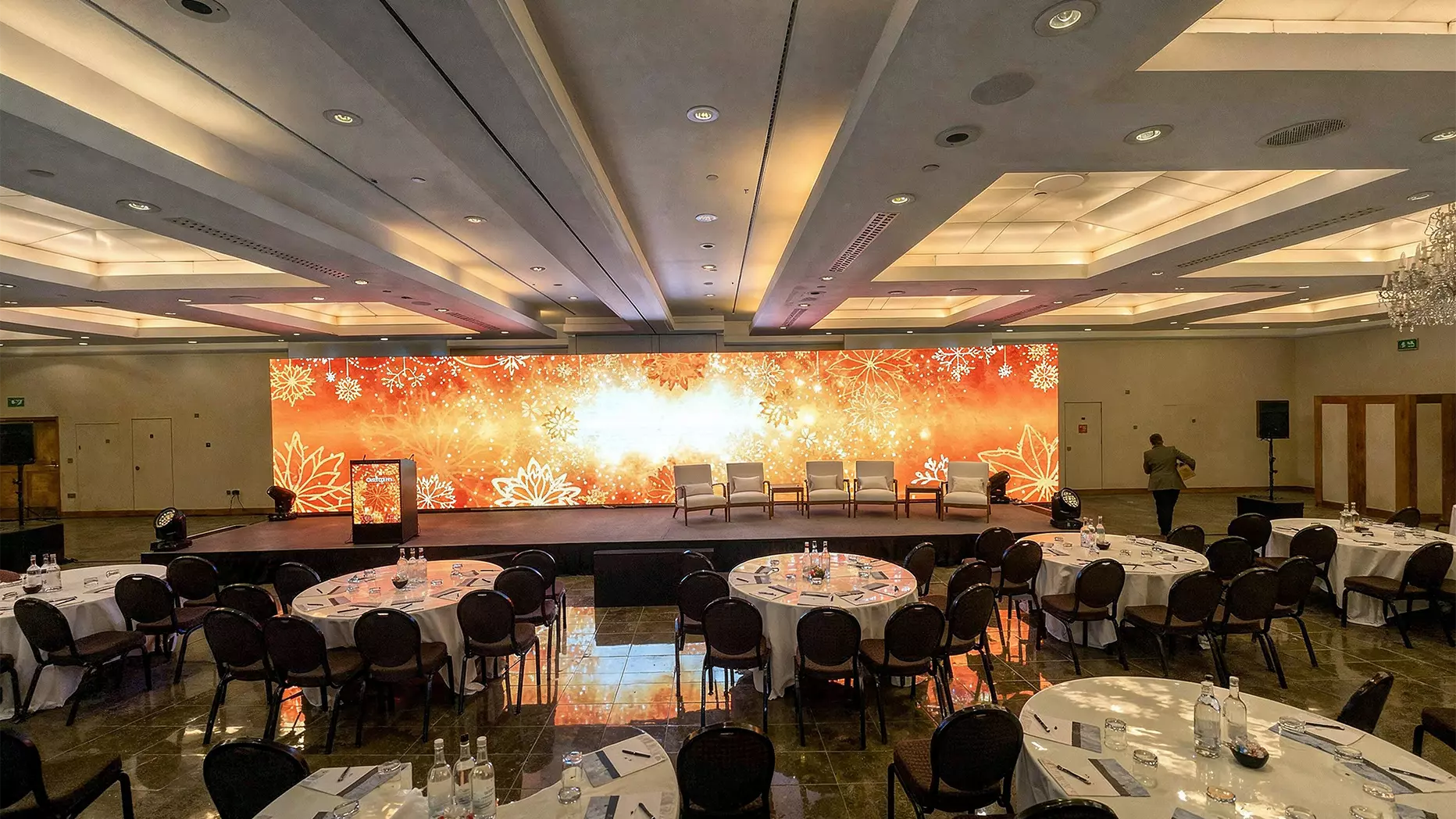
To organise a cultural event with LED video walls, define your event goal, understand your audience, choose the right venue, plan your budget, select the correct LED screen type, prepare content early, test all systems, and create a clear live-day plan with backups.
Cultural events should feel exciting from the moment people arrive. Planning them is a careful balance between heritage and modern event production. Whether you are staging a vibrant Mela in Birmingham, a Lunar New Year celebration in London, or an immersive gallery launch in Edinburgh, the visual delivery is what bridges the gap between tradition and the audience.
To achieve that “wow” factor, LED video wall-hire has quickly moved from a luxury to an essential part of modern cultural events. Unlike traditional projection, high-brightness LED panels allow for crystal-clear visuals even in the unpredictable UK daylight.
This guide outlines how to navigate the logistics of LED screen rental, from technical specifications to UK safety considerations, so your cultural event runs smoothly.
What Is A Cultural Event? Types, Scales and Examples
A cultural event is any organised gathering that celebrates or showcases traditions, arts, music, food, or community identity.
These events can range from small local gatherings to large public festivals with thousands of attendees.
In the UK, cultural diversity is high. According to the 2021 census, over 10 million people are from different cultural backgrounds. This makes cultural events more important and more complex to plan.
Unlike corporate events, cultural events focus heavily on experience and emotion, not just information. This means visuals must support storytelling, atmosphere, and audience engagement.
Let’s look at this in more detail:
| Event Type | Examples | Scale | LED Video Wall Uses |
| Music & Arts Festival | Manchester International Festival, Green Man Festival. | 5,000–100,000+ attendees | Stage backdrops, IMAG screens, sponsor branding, crowd-facing visuals. |
| Heritage & History Festival | Jane Austen Festival, Eisteddfod. | 500–20,000 attendees | Archive footage, story-led content, outdoor signage. |
| Multicultural Community Festival | Birmingham Mela, Bradford 2025-style city event. | 10,000–100,000+ attendees | Multi-zone LED, live performance backdrops, wayfinding totems. |
| Fashion & Design Show | London Fashion Week, regional showcases. | 200–5,000 attendees | Runway backdrops, GOB LED, creative ceiling visuals. |
| Art Exhibition & Gallery | Tate-style late events, gallery nights, pop-ups. | 50–2,000 attendees | Fine-pitch indoor LED, digital art walls, ambient visuals. |
| Food & Drink Festival | Taste of London, regional food festivals. | 2,000–30,000 attendees | Demo backdrops, sponsor loops, direction screens. |
| Corporate Cultural Event | Company culture days, DEI events. | 50–500 attendees | Presentation backdrops, networking atmosphere and branded content. |
| Theatrical & Performance | Fringe-style productions, touring cultural theatre. | 100–3,000 attendees | Dynamic set design, scenic backdrops, interactive visuals. |
Why LED Video Walls Work So Well for Cultural Events
Cultural events often combine many things at once. They bring together live performance, emotion, information, branding, movement, and crowd flow. That is why LED video walls are so useful. They are flexible enough to support all of these needs in one event.
They can be used for:
- Main stage backdrops.
- Scenic visual storytelling.
- Performer names and introductions.
- Sponsor loops.
- Live camera relay.
- Multilingual messaging.
- Event timings.
- Welcome content.
- Directional or wayfinding screens.
- Closing messages and thank you content.
This makes LED walls more than a design feature. They become part of the event system. They help the event look better, but they also help it work better.
In real event environments, organisers often rely on LED video walls to solve multiple challenges at once. They improve visibility in large spaces, help manage audience flow, and keep the event visually engaging from start to finish.
How To Organise a Cultural Event with LED Video Walls?
Here are the steps for organising a successful cultural event in the UK:
Step 1: Define The Purpose Of The Event & Visual ROI
Before choosing a screen, a venue, or a layout, you need to be clear about the event goal. An LED wall isn’t just a decoration; it’s a tool for engagement and sponsor visibility. Ask yourself:
- What is this event trying to do?
- Who is it for?
- What should people remember when they leave?
- What does success look like?
Some cultural events focus on celebration, awareness, and community engagement, while others aim to deliver a premium experience that reflects a brand, organisation, or city.
Once the goal is clear, the LED wall becomes easier to plan.
For example, a heritage event may need slower, story-led visuals with archive imagery. A music-led cultural event may need high-energy motion content and live performance support. A corporate cultural event may need cleaner branded visuals, speaker support, and structured programme slides.
Set Clear Goals
Use simple goals that your team can work with. These can include:
- Target audience size.
- Sponsor visibility goals.
- Social content opportunities.
- Audience feedback targets.
- Engagement across different event zones.
- Content deliverables before and during the event.
Clear goals help keep the screen design focused. Without them, the visuals often become random or overly decorative.
Step 2: Understand The Audience
Audience planning is one of the most important parts of cultural event management.
Different audiences need different visual approaches.
A family audience needs clear messaging, easy wayfinding, and simple visuals. Corporate guests often need a cleaner presentation and stronger branding. Arts and design audiences may care more about visual quality, style, and detail. A younger audience may respond well to bold, shareable moments and immersive screen content.
Audience Types And Visual Needs
| Audience Type | What They Need | LED Planning Impact |
| Families and public visitors | Easy-to-read signs and strong visuals. | Larger text, simple content, strong visibility. |
| Arts and cultural audiences | Better detail and colour quality. | Fine-pitch indoor LED and stronger creative design. |
| Corporate guests and sponsors | Clean visuals and polished presentation. | Professional layouts and stronger brand alignment. |
| Media or live-streamed audience | Camera-friendly output. | Better refresh rate and stable visual setup. |
| Social-first younger audience | Photo-worthy and engaging visuals. | Bold content and creative screen layouts. |
The better you understand the audience, the better the event will feel. Good screen planning always starts with the people who will be standing in front of it.
In real events, poor audience planning often leads to content that is hard to read, screens that feel disconnected, or visuals that fail to engage the crowd.
Step 3: Build The Budget Properly
One of the biggest mistakes in event planning is budgeting only for the screen panels and forgetting everything around them.
An LED video wall setup is not just the wall itself. It also includes delivery, installation, support structure, processing, playback, rigging, power, testing, operation, and breakdown.
Average Cost Ranges For Planning
| Option | Typical Range | Best For |
| Small LED wall hire, up to 12 sqm | £1,500–£5,000 per day | Small one-off events and simple stage use. |
| Medium LED wall hire, 12–30 sqm | £5,000–£15,000 per day | Mid-sized cultural events and indoor events. |
| Large LED wall hire, 30 sqm+ | £15,000–£50,000+ per day | Large festivals and major public events. |
| Entry-level purchase | £10,000–£40,000 | Spaces with regular ongoing use. |
| Commercial-grade purchase | £40,000–£200,000+ | Permanent or high-frequency installations. |
For most cultural events, hiring is the better choice. It gives you the right size for the event, avoids a big capital cost, and usually comes with professional support.
Budget Items People Forget
Make sure your budget also includes:
- Screen content design.
- Motion graphics.
- Content playback or operator support.
- Rigging and support structure.
- Power distribution.
- Generator support if needed.
- Transport and access costs.
- Spare equipment.
- Rehearsal time.
- Insurance.
If you miss these items early, the project often becomes more stressful and more expensive later.
In practice, many events run into problems because only the screen cost is considered, while technical setup, crew, and testing are ignored.
Step 4: Choose The Right Venue
The venue affects almost every screen decision.
A venue may look beautiful in photos but still be a poor fit for LED video walls if the ceiling is too low, the power is too weak, or the access is too tight.
Venue Checks You Should Always Do
Before confirming the venue, check:
- Ceiling height.
- Load-in access.
- Door widths and lift size.
- Power supply.
- Rigging options.
- Floor load capacity.
- Stage position.
- Control desk location.
- Daylight in the room.
- Viewing distance from front to back.
- Emergency exits and movement routes.
These practical checks matter because a cultural event needs to feel smooth. If the wall is too small, people struggle to see. If the room is too bright, the content can look washed out. And if the setup blocks movement, it creates stress for both guests and crew.
Venue Suitability Guide
| Venue Type | Suitability | Best Setup |
| Converted warehouse | Very good | Large backdrop wall or creative hanging layout. |
| Hotel ballroom | Good | Mid-sized stage wall. |
| Arts centre | Excellent | Flexible creative layout. |
| Civic hall | Moderate | Smaller wall with careful sizing. |
| Outdoor festival site | Excellent | Outdoor-rated high-brightness LED. |
| Corporate space | Moderate | Fine-pitch indoor wall. |
A site visit is always worth doing. Plans and photos never tell you the full story.
Step 5: Pick The Right LED Wall
This is where many event organisers go wrong. They either choose the biggest wall they can afford or the cheapest one they can get.
The right choice depends on:
- Indoor or outdoor use.
- Viewing distance.
- Content type.
- Brightness needs.
- Camera use.
- Venue size.
- Audience position.
Indoor Vs Outdoor LED
| Feature | Indoor LED | Outdoor LED |
| Brightness | 800–2,000 nits | 3,000–10,000+ nits |
| Pixel Pitch | P1.2–P3.9 | P3.9–P10 |
| Weather Protection | No | Yes |
| Best Use | Ballrooms, theatres, galleries | Festivals, outdoor stages, public spaces |
In real-world event setups, the difference between a good and a poor LED display often comes down to planning details such as pixel pitch, brightness, and content preparation.
Pixel Pitch Made Simple
Pixel pitch means the distance between the LED pixels. A smaller pitch gives a sharper image when people are standing close. A larger pitch works better when people are further away.
General Pixel Pitch Guide
| Pixel Pitch | Best Viewing Distance | Best Use |
| P1.2–P1.9 | 1.5–3m | Close-up indoor displays, gallery walls, fashion detail. |
| P2.0–P2.6 | 3–5m | Indoor conferences, cultural events. |
| P2.6–P3.9 | 5–10m | Ballrooms, theatres, indoor stages. |
| P3.9–P5.0 | 8–15m | Large indoor and mixed-use event spaces. |
| P5.0–P8.0 | 12–25m | Outdoor stages and larger open spaces. |
| P8.0–P10+ | 20m+ | Very large outdoor displays. |
Brightness And Refresh Rate
Brightness matters most in bright venues and outdoor spaces.
- 800–1,500 nits work in many indoor spaces.
- 1,500–3,000 nits is better where there is daylight.
- 3,000–5,000+ nits work better outdoors in daytime.
Refresh rate matters when the wall is filmed.
- 1,920Hz works for basic viewing.
- 3,840Hz is better for livestream and hybrid use.
- 7,680Hz is better for more demanding filmed setups.
LED Video Wall Vs Projector: Which Is Better For Cultural Events?
| Feature | LED Video Wall | Projector |
| Brightness | Very high | Low in bright spaces |
| Visibility | Clear in daylight | Often washed out |
| Flexibility | High | Limited |
| Setup | Modular | Fixed |
| Impact | Strong visual presence | Lower impact |
For cultural events, LED video walls are usually the better choice, especially in large or well-lit environments.
Step 6: Decide How The Wall Will Be Used
Do not install a wall without deciding its job.
A cultural event LED wall can do many things, but it should not try to do all of them at once without a plan.
Common Uses
- Stage backdrop.
- Side screen support.
- Live performance visuals.
- Welcome content.
- Sponsor loops.
- Archive visuals.
- Signage and direction.
- Social content wall.
- Programme schedule.
- Closing and thank-you screen.
Creative Layout Options
You can also go beyond the standard flat wall.
Options include:
- Curved walls.
- Panoramic ultra-wide walls.
- Split screens.
- Vertical totems.
- Ceiling LED panels.
- Shaped LED builds.
- Close-up GOB LED surfaces.
The best event designs treat the LED wall as part of the environment, not just a screen behind the stage.
Step 7: Plan The Content Early
A high-quality LED wall cannot save weak content.
If the visuals feel rushed, badly sized, or hard to read, the event will still feel underplanned.
That is why content should be prepared early.
Content to Prepare
- Welcome screens.
- Countdown screens.
- Event title loops.
- Performer and speaker names.
- Sponsor visuals.
- Holding slides.
- Archive or story visuals.
- Live relay graphics.
- Directional messaging.
- Emergency slides.
- Thank you, and closing visuals.
Technical Content Tips
| Content Item | Best Practice |
| Resolution | Match the exact LED wall size. |
| Frame Rate | 25fps or 50fps. |
| File Type | MP4 or MOV. |
| Text Size | Keep it large and easy to read. |
| Edge Margin | Leave a safe space near edges. |
| Colour | Use clear contrast and clean visuals. |
Keep on-screen wording short. Guests should understand it quickly.
Step 8: Prepare The Technical Setup
A strong live day usually comes from good prep the day before.
Simple Setup Timeline
| Phase | Timing | Main Job |
| Site survey | 4–8 weeks before | Check power, access, rigging and layout. |
| Pre-rig | Day before | Build structure and power runs. |
| LED install | The day before or the morning of the event. | Mount panels and connect systems. |
| Content test | 3–4 hours before doors | Load and test all media. |
| Rehearsal | 2 hours before doors | Run cues and backups. |
| Live event | During event | Operate and monitor continuously. |
| Breakdown | After event | De-rig and clear safely. |
Pre-Event Checklist
Before guests arrive, make sure:
- All panels are working.
- Brightness is balanced.
- No dark modules show.
- Content is loaded.
- All inputs are tested.
- Backup files are ready.
- Camera feed is checked.
- Emergency slides are accessible.
- Power is stable.
- The operator knows the run sheet.
Never leave a live event LED wall unmanaged. It should always be operated by someone who knows the system.
Step 9: Plan For Live-Day Problems Before They Happen
A professional event team does not pretend that nothing will go wrong. It plans for what could go wrong.
Common Issues And Responses
| Issue | Fast Response | Prevention |
| Panel failure | Swap during break. | Carry spare panels. |
| Playback freeze | Switch to the backup device. | Test backup in rehearsal. |
| Camera signal loss | Show branded fallback graphic. | Keep static backup content ready. |
| Brightness mismatch | Adjust the live setting. | Calibrate before doors. |
| Power issue | Use protected backup or generator support. | Confirm power early. |
| Wrong file size | Use the nearest backup file. | Check files 48 hours before. |
Live-Day Roles
Make sure these roles are clear:
- Event lead.
- Stage manager.
- Show caller.
- LED technician.
- Audio operator.
- Lighting operator.
- Content operator.
When roles are clear, small issues stay small.
In larger cultural events, technical planning is often what separates a smooth experience from a stressful one, especially when multiple screens, live feeds, and audience movement are involved.
Step 10: Review The Event Afterward
The event is not finished when the audience leaves.
A proper post-event review helps improve future planning and gives useful proof for sponsors, funders, and stakeholders.
What to Measure
Review:
- Attendance.
- Audience flow.
- Sponsor visibility.
- Social content performance.
- Audience feedback.
- Access and inclusion feedback.
- Photo and video quality.
- Content performance.
- Technical issues.
- Overall value relative to spend.
If the LED wall helped improve visibility, storytelling, event flow, or sponsor value, that should be part of the review.
Hire Vs Buy: What Makes More Sense?
| Factor | Hire | Buy |
| Upfront cost | Lower | Higher. |
| Flexibility | High | Fixed. |
| Maintenance | Included | Ongoing. |
| Technical support | Included | Separate. |
| Scalability | Easy | Limited. |
| Best for | One-off and repeat events with changing needs. | Permanent venues with regular use. |
For most cultural events, hiring makes more sense. It is simpler, more flexible, and lower risk.
| Pro Tip: For events focused on aesthetics and high-end presentation, such as cultural galas, see our complete guide on LED video walls for fashion shows to understand how high-resolution screens can elevate brand prestige. |
Build The Environment, Not Just The Stage
A cultural event should do more than fill a venue. It should create a feeling, guide people through an experience, and help them understand what the event stands for.
That is why LED video walls can be such a valuable part of the plan. When chosen properly and used with purpose, they do much more than add colour to the stage. They support storytelling, improve visibility, help with flow, strengthen sponsor value, and make the whole event feel more complete.
The key is to plan the LED video wall as part of the event from the beginning, not as an afterthought. When used correctly, it supports storytelling, improves visibility, and helps create a more engaging and memorable experience for every attendee.
That is when it becomes truly powerful.
Common Mistakes To Avoid
Many cultural events face the same issues:
- Choosing the wrong pixel pitch for the audience distance.
- Ignoring venue lighting conditions.
- Preparing content too late.
- Not testing playback systems properly.
- Having no backup plan.
- Trying to use one screen for too many purposes.
Avoiding these mistakes can significantly improve the overall event experience.
FAQs
How Far In Advance Should I Book An LED Video Wall?
For smaller events, 4 to 8 weeks can work well. For larger or more complex events, 3 to 6 months is safer.
What Pixel Pitch Is Best For A Cultural Event?
It depends on how close the audience will be. For close indoor viewing, use a finer pitch. For larger stages and outdoor audiences, a wider pitch usually works better.
Can LED Video Walls Be Used Outdoors?
Yes, but they need outdoor-rated panels, stronger brightness, and the correct support structure.
What Content Format Should I Prepare?
MP4 or MOV files at the correct wall resolution are a safe choice. Keep the text large and the visuals clean.
Do I Need A Dedicated Operator?
Yes, especially if the content changes throughout the event. Someone should manage cues, playback, and backup content.
What Is GOB LED?
GOB LED has a protective surface layer, which makes it useful for close-up environments like fashion shows, galleries, and interactive spaces.
