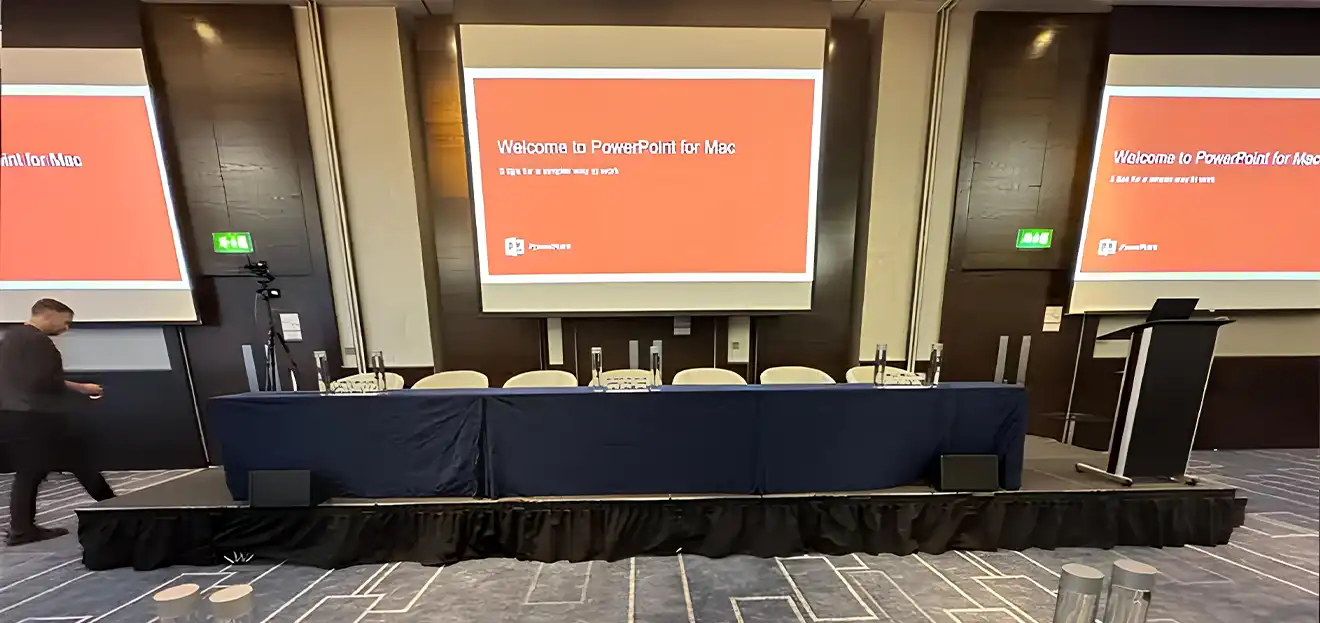
Stage backdrops can be designed with LED screens and projection to create dynamic and immersive visual experiences. LED screens offer high-resolution, bright visuals that are visible even in well-lit rooms and can be configured in various shapes and sizes for maximum flexibility. Projection can also be paired with LED screens to add depth, using techniques like 3D projection mapping. It can also be a cost-effective way to create large-scale visuals.
Stage backdrops do more than fill empty space; they set the tone for the entire event. Whether it’s a conference, gala, concert, or product launch, the backdrop becomes the visual story behind every presenter or performer.
Today, event designers rely heavily on LED screens and projection to create dynamic, engaging stage environments that capture attention and shape the audience experience. Understanding how each technique works is the key to building a backdrop that looks intentional, polished, and memorable.
What Is Stage Backdrop Design?
A stage backdrop is the visual anchor of any event. It’s where the audience looks first, and it sets the tone for everything that follows. Whether it’s a conference, awards night, gala dinner, product launch, or concert, the backdrop becomes the ‘stage storytelling layer’, blending design with technology.
Modern events rely heavily on stage backdrop design using either LED screens or projection, depending on the venue’s lighting, mood, and creative goals. These two approaches achieve similar roles but deliver very different visual experiences.
How Do LED Screens Transform Stage Backdrops?
LED screens enhance stage backdrops with high brightness, clarity, and motion graphics that remain sharp even under strong lighting.
LED screens have become a favourite in modern event production because of their power, versatility, and impact. An LED stage backdrop can instantly turn a blank stage into a dynamic storytelling surface.
Why LED Screens Excel
- High brightness cuts through strong lighting, perfect for conferences, award shows, and concerts.
- Motion graphics & animations appear crisp and vibrant.
- Real-time content like countdowns, transitions, speaker intros, and live feeds integrates smoothly.
- Flexible sizes, from narrow strips to full-stage walls.
- Creative shapes using modular panels.
Using LED screens, you can build anything from a simple presentation screen to a fully immersive, multi-layered LED backdrop design.
Where LED Screens Shine
- Corporate conferences.
- Award ceremonies.
- Fashion runways.
- Concerts & music shows.
- Product launches.
- Broadcast events.
The clarity and sharpness of an LED screen backdrop are unmatched in bright, stage-lit environments.
How Projection Works in Stage Backdrop Design
Projection enhances stage backdrops through atmospheric visuals, artistic textures, and large-format imagery that works best in controlled lighting environments.
Projection is the classic approach and still highly relevant. It offers a softer, more cinematic visual quality compared to LED.
Types of Projection
- Front projection: projector in front of the screen.
- Rear projection: projector behind the screen (preferred for clean visuals without shadows).
- Projection mapping: projected visuals that blend onto surfaces, shapes, or 3D structures.
Why Projection Is Still Loved
- Cinematic texture for storytelling.
- Wider canvases at lower cost.
- Soft, ambient look perfect for galas, theatres, and ceremonies.
- Lightweight setups for quick installations.
Projection becomes a smart choice when you want a scenic or artistic projection backdrop rather than a sharp digital one.
Where Projection Excels
- Theatre shows.
- Galas & dinners.
- Award nights.
- Religious or cultural ceremonies.
- Artistic performances.
- Vintage or minimalist themes.
Projection is particularly effective in darker venues where light control is possible.
LED Screens vs Projection: Which Works Best for Stage Backdrops?
LED screens work best in bright venues needing sharp visuals, while projection offers artistic flexibility in low-light environments. Both choices are strong, but they perform differently depending on venue, lighting, and creative direction.
LED Screens Are Ideal If
- The stage is heavily lit.
- You need crisp branding.
- You want motion graphics and bold visuals.
- The event is modern or high-energy.
- The backdrop must be visible from far distances.
Projection Is Ideal If
- The venue is dim or fully controllable.
- You need texture, atmosphere, or artistic storytelling.
- You’re working with large scenic elements.
- The event theme is elegant, minimal, or theatrical.
- You need cost-efficient large imagery.
Choosing between them is less about technology and more about what emotion or atmosphere you want to create on stage.
LED Screens vs Projection for Stage Backdrops: Quick Comparison
This quick comparison summarises how LED screens and projection differ in clarity, brightness, mood, cost, and creative flexibility for a stage backdrop.
| Factor | LED Screens | Projection |
| Brightness | Extremely bright; unaffected by stage lighting | Best in low-light venues |
| Clarity | Very sharp, even up close | Softer, cinematic look |
| Atmosphere | Bold and modern | Artistic and immersive |
| Content Flexibility | Perfect for motion graphics & live content | Ideal for textures, scenic looks, and mapping |
| Setup Time | Requires structure & panel calibration | Quick, depending on the projector placement |
| Venue Compatibility | Works in bright venues | Best in dark environments |
| Depth & Mood | High-energy visuals | Ambient, elegant styling |
| Cost Level | Medium–high | Medium |
| Best For | Conferences, awards, concerts | Galas, theatres, artistic events |
Real Event Use Cases
LED screens suit bright, corporate, or energetic events, while projection suits atmospheric, artistic, or theatrical environments.
- Award Shows
LED screens create sharp speaker intros and dramatic transitions. Projection adds elegant backgrounds during speeches.
- Gala Dinners
Projection works well for ambient visuals like slow-moving patterns, stars, or textures.
- Corporate Keynotes
LED backdrops support data visualisations, animations, and live feeds with clarity.
- Fashion Runways
Both are used: LED screens for graphic runway visuals and projection for mood lighting effects.
- Concerts
LED is preferred for high-energy visuals. Projection mapping is combined for artistic moments.
- Product Launches
Depending on the brand tone, both LED walls and projectors can create immersive stage moments. If you’re exploring display options for your stage setup, companies like LED video wall-hire can guide you on whether LED screens or projection align better with your event theme and venue lighting.
Common Mistakes in Stage Backdrop Design
Many mistakes happen due to poor lighting control, incorrect screen size, low-resolution content, or choosing technology that doesn’t suit the venue.
1. Choosing Bright Screens for Low-Light Themes
Sometimes, LED brightness overpowers elegant settings.
2. Using Projection in Bright Rooms
Projection suffers from washout if the lighting isn’t controlled.
3. Wrong Screen Sizes
- Too small = gets ignored.
- Too large = overwhelms the speaker.
4. Not Preparing Content for the Correct Resolution
Poorly scaled visuals look unprofessional.
5. Overloading Motion Graphics
Motion that’s too fast distracts the audience.
6. Ignoring Viewing Distance
LED’s pixel pitch matters; close audiences need tighter spacing.
7. Not Testing Content on the Actual Setup
Colours, brightness, and timings often need live adjustments.
Final Thoughts On LED Screens and Projection
LED screens deliver sharp, high-impact visuals, while projection creates atmospheric, artistic backdrops. The ideal choice depends on lighting, venue style, and the emotional tone of your event.
Both technologies are strong; the key is matching them to your event’s style, lighting conditions, and desired atmosphere. LED screens set a bold, high-energy tone, while projection brings a cinematic, immersive quality ideal for mood-driven events.
If you’re planning a stage setup and need help choosing between LED screens and projection, a specialist provider like LED Video Wall Hire can help you compare options based on your venue, lighting, and creative goals.
FAQs
Are LED screens better than projection for bright venues?
Yes. LED screens remain visible under strong stage lights, making them ideal for conferences, concerts, and corporate events. Projection works best in controlled, low-light environments where brightness can be managed.
Can projection create cinematic or artistic stage looks?
Absolutely. Projection is widely used for atmospheric textures, artistic patterns, and immersive scenic designs. It creates a softer, more organic look compared to LED’s sharp visuals.
What screen size is best for stage backdrop design?
It depends on venue size, stage width, and audience distance. Larger venues need wider screens or projection canvases, while small halls benefit from tighter, proportional displays.
Can LED backdrops display live content?
Yes. LED screens handle live streams, presentations, countdowns, and real-time motion graphics with ease, making them highly versatile for modern events.
What affects projection clarity the most?
Lighting, screen material, projector brightness, and distance all affect clarity. Projection performs best when ambient light is reduced, and the projection surface is smooth and bright.
Is projection cheaper than LED screens?
In many cases, yes. Projection offers a large canvas at a lower cost, but LED screens provide more brightness and flexibility in lighting-heavy environments.
