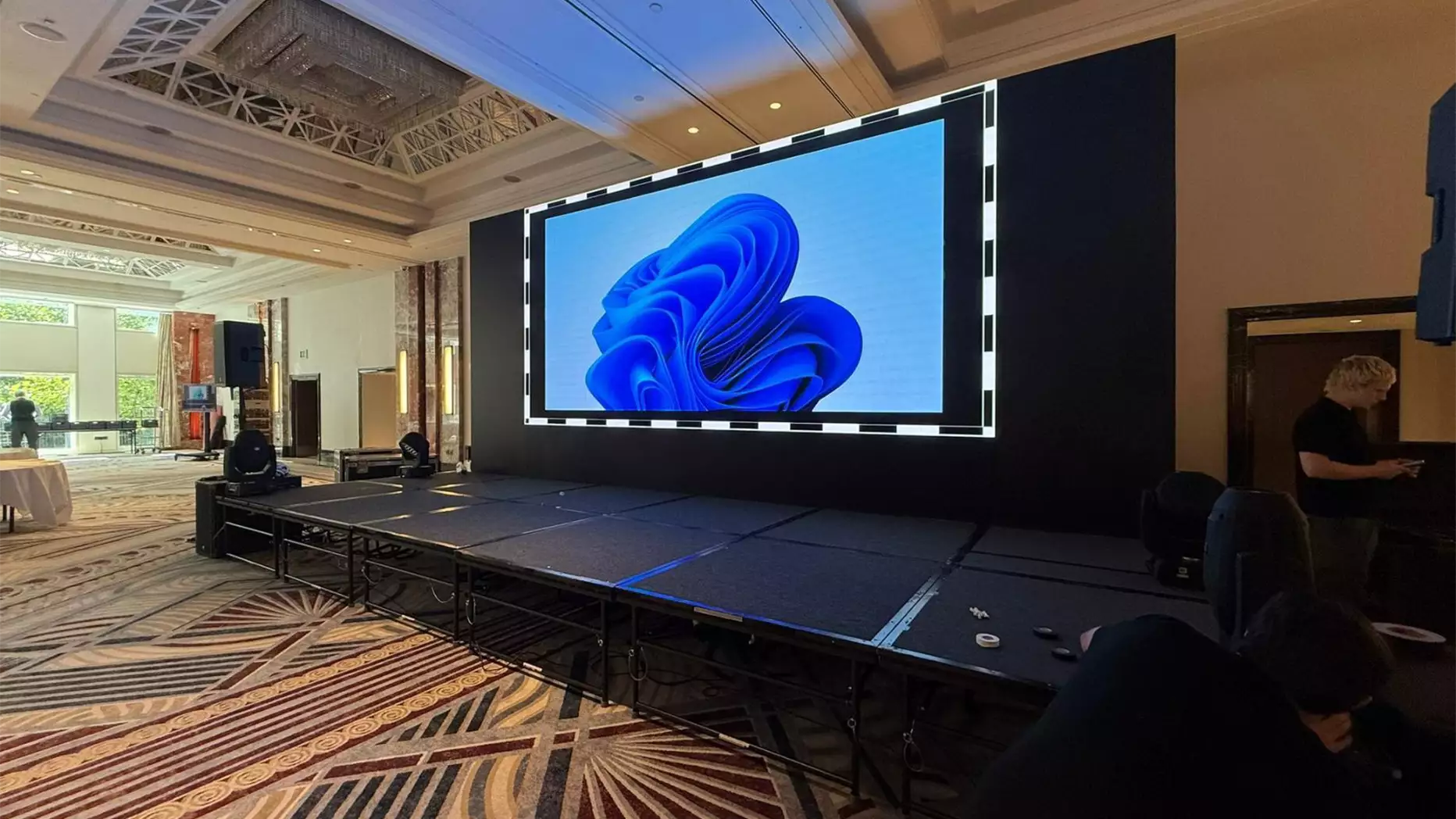
LED pixel pitch and viewing distance follow one rule of thumb: minimum comfortable viewing distance in metres roughly equals pixel pitch in millimetres. A 3mm wall reads cleanly from 3m back, 6mm from 6m, and 10mm from 10m. Content type, camera capture, and audience expectations shift the answer at the edges.
A planner specified a 1.9mm pixel pitch LED wall for an outdoor evening event in a London park last summer. The wall looked stunning. It also cost roughly three times as much as it needed to because, from 20 metres back, nobody could tell it apart from a 6mm wall. They could only feel the difference in the budget.
That is the trap that LED pixel pitch and viewing distance set for most event planners. “Finer is better” sounds right, but it is expensive, and “the biggest wall needs the finest pitch” is the opposite of the truth. The real answer is a short formula with a few honest caveats, and once you know it, specifying the right wall stops feeling uncertain.
What is LED Pixel Pitch and How Does It Relate to Viewing Distance?
LED pixel pitch is the distance, measured in millimetres, between the centres of two adjacent LED pixels on a panel. A 2.6mm pitch means the LEDs sit 2.6mm apart. A 6mm pitch means they sit more than twice as far apart. Smaller pitch means higher resolution per square metre and a cleaner image up close. Bigger pitch means a coarser image up close, but no visible difference from further back.
The link to viewing distance is direct. Every wall has a minimum comfortable viewing distance, which is the point at which individual pixels stop being visible, and the image reads as a single, smooth picture. Sit closer than that, and you’ll see the LED grid. Sit further back, and the resolution looks identical to a wall with a much finer pitch.
Pixel pitch decides three things planners actually care about:
- Image Sharpness From Your Closest Viewer
The front-row distance is the constraint, not the back row.
- Camera Capture
Cameras can resolve pixel structure and moiré patterns at distances where the human eye sees a clean image. Pitch matters more for camera-facing builds than for in-room audiences.
- Budget
Finer pitch costs significantly more per square metre, draws more power, and demands more processing. The cost curve is steep below about 2.6mm.
This is one of the first specs we discuss when configuring a rental LED video wall, alongside brightness, processor, and content workflow. The right pitch for a 4-metre conference stage at ExCeL London is different from the right pitch for an outdoor concert at the same venue’s plaza, even though the wall size might be similar.
The Pixel Pitch and Viewing Distance Formula and Why It’s a Guideline, Not a Law
The most widely used rule of thumb is this:
| Quick Formula Minimum comfortable viewing distance (metres) ≈ pixel pitch (millimetres).A 3mm pitch reads cleanly from about 3 metres. A 6mm pitch from about 6 metres. A 10mm pitch from about 10 metres. |
A more conservative version, used for premium and broadcast work, doubles or triples that distance, so a 3mm pitch becomes 6 to 9 metres for “looks pristine” rather than “looks acceptable.” Both are guidelines, not engineering law. Three variables shift the answer:
1. Content Type
Text-heavy content (corporate slides, data dashboards, ticker feeds) shows pixel structure more clearly than abstract motion graphics. For text, lean to the conservative side of the formula. For brand films and ambient visuals, the basic rule holds.
2. Camera Vs. Human Eye
Cameras have a tighter relationship with pixel pitch than the human eye. A wall that looks clean to the audience can show a pixel grid or moiré on a camera shot, especially under telephoto. For broadcast and camera-facing builds, including XR and virtual production stages using LED walls to replacing green screens, a finer pitch is closer to mandatory.
3.Audience Expectations
A festival audience at 30 metres accepts coarser visuals. A premium product launch with a brand team in the front row at 3 metres does not. Match the spec to who is closest, not to who is average.
Pixel Pitch by Viewing Distance: A Quick Reference
The mapping below holds up for the majority of UK rental scenarios. Use it as a starting point, then adjust for content type and camera presence.
| Pixel pitch | Comfortable Minimum Viewing Distance | Use Case |
| 1.5mm – 1.9mm | ~1.5–2m | Studio backdrops, camera-facing builds, retail and exhibition close-viewing, fine-detail brand work. |
| 2.6mm – 2.9mm | ~2.5–3m | Conference stage backdrops at venues like ExCeL London or Olympia London, premium brand launches and awards shows. |
| 3.9mm – 4.8mm | ~4–5m | Larger conference and corporate event backdrops, broadcast studios with distant cameras, and exhibition main displays. |
| 5.9mm – 6mm | ~6m | Large indoor venues, concerts at Manchester Central or similar, outdoor stage screens viewed from 6m+. |
| 10mm and above | ~10m+ | Outdoor festivals, sports venues, billboards, large-format public events. |
The two most common spec mistakes:
- Over-buying pitch for outdoor and large-venue events where the closest audience is 10+ metres back. You pay for the resolution your audience cannot see.
- Under-buying pitch for camera-facing or text-heavy builds where the room looks fine, but the broadcast feed shows the grid or moiré. The in-room judgement misleads you.
Both come from skipping the basic question: where is your closest viewer, and what are they looking at?
This connects to the broader technical specifications to check before renting an LED wall, because pitch is one of the first numbers on the quote, and an unclear pitch is one of the clearest red flags when comparing LED video wall hire suppliers in London. A supplier who cannot tell you the pitch off the top of their head is not building the right wall for your event.
How to Calculate the Right Pixel Pitch for Your Event (Step by Step)
The right pitch is the one that allows your closest viewer to see a clean image without you overpaying for resolution your audience cannot see. Run these four steps in order before you request a single quote.
Step 1: Measure the Closest-Viewer Distance
Not the average. Not the middle of the room. The closest seat, the closest standing area, or the closest camera position, whichever is nearer to the wall. That distance, in metres, is your starting number.
Step 2: Apply the Rule of Thumb
Use your closest-viewer distance in metres as the maximum workable pixel pitch in millimetres. If the closest viewer is 3m away, you can usually go up to a 3mm pitch. Closest viewer at 6m? A 6mm pitch is fine.
Step 3: Apply a Content Modifier
If the wall will carry heavy text, dense data, or fine-detail brand work, drop one pitch band finer. If the wall is mostly ambient motion graphics, the base number stands.
Step 4: Apply a Camera Modifier
If the wall is camera-facing, especially for broadcast or awards, drop one or two pitch bands finer than the eye-level calculation would suggest. The camera sees more grid than the audience does.
| Worked ExampleBrief: Corporate conference at Olympia London. Front row 4m from the wall. Mixed content: keynote slides, ambient brand films, live speaker IMAG. Two PTZ cameras at 8m are feeding a live stream. Step 1: The closest viewer is 4m.Step 2: Base pitch ≤ 4mm. A 3.9mm wall fits.Step 3: Keynote slides are text-heavy. Drop one band. Now 2.9mm.Step 4: Cameras at 8m are not tightly framed on the wall. No further drop needed.Final spec: 2.9mm pixel pitch. A 2.6mm option is the upgrade if budget allows. |
Choosing the Right Pitch for Your Venue and Content
Three pieces of information get you a properly specified pitch every time: the closest-viewer distance, the content type, and whether the wall is camera-facing. Most quote requests fail because the brief says “as good as possible” instead of giving the supplier the actual viewing geometry.
Here is how the right answer changes by venue and event type:
- Corporate conference at Olympia London or ExCeL London with a 4-metre stage and audience starting around 3 metres from the wall: 2.6mm or 2.9mm is usually the sweet spot.
- Awards show with cameras tight on the wall: drop to 1.9mm or finer to keep the broadcast cut clean.
- Product launch where brand teams will inspect the wall up close at rehearsal: lean fine. 1.9mm to 2.6mm.
- Exhibition stand at ExCeL London where visitors are within arm’s reach: 1.5mm to 2.6mm is the working range.
- Outdoor activation in Birmingham or Manchester with the closest audience 15 metres back: 6mm or coarser is almost certainly fine. Finer pitch is wasted spend and a heavier rig.
- Festival main stage screen: 8mm to 10mm is standard. The closest crowd is rarely under 10m.
The honest version of the spec conversation is not “What is the best pitch?” It is “What is the lowest-cost pitch that still looks clean from where the closest viewer is sitting?” That question protects the budget and gets the visual result you actually need.
Final Thoughts on LED Pixel Pitch and Viewing Distance
LED pixel pitch and viewing distance are not complicated, but they are easy to get wrong in opposite directions. Planners over-specify for distant audiences and under-specify for close or camera-facing builds. The formula is a guideline; the closest-viewer question is the real driver, and content type and camera presence shift the answer at the edges. Specify against the closest viewer, not the average, and you will book the right wall the first time.
| Speak to a Pitch Specialist Before You Request a Quote LED Video Wall Hire is a Central London supplier with MIA accreditation and 10+ years of experience supporting UK venues. If you are sizing a wall and want the pitch matched to your room, content, and cameras, speak to us before the quote stage. Call: 0207 177 4075 Email: [email protected] |
FAQs
What Is the Rule for Pixel Pitch vs Viewing Distance?
The common rule of thumb is that the minimum comfortable viewing distance in metres roughly equals the pixel pitch in millimetres, so a 3mm wall reads cleanly from about 3 metres back. A more conservative version doubles that distance for premium and broadcast work. Content type, camera capture, and audience expectations all shift the answer, so treat it as a guideline.
Does a Smaller Pixel Pitch Always Look Better?
Not in practice. Finer pitch only looks better if your audience is close enough to see the difference. For outdoor festivals or large venues where the closest viewer is 10+ metres back, a finer pitch wall looks identical to a coarser one, but costs significantly more and demands more processing. Pitch should match the closest viewing distance, not the budget ceiling.
What Pixel Pitch Do I Need for a Conference at ExCeL London or a Similar Venue?
For a typical conference stage at venues like ExCeL London or Olympia London, where the front row sits 3 to 5 metres from the wall, a 2.6mm or 2.9mm pixel pitch is usually the right choice. For camera-facing or awards builds, drop to 1.9mm. For larger plenary halls with audiences further back, 3.9mm to 4.8mm can be more cost-effective.
